PMBOK Guide Eighth Edition: What You Need to Know
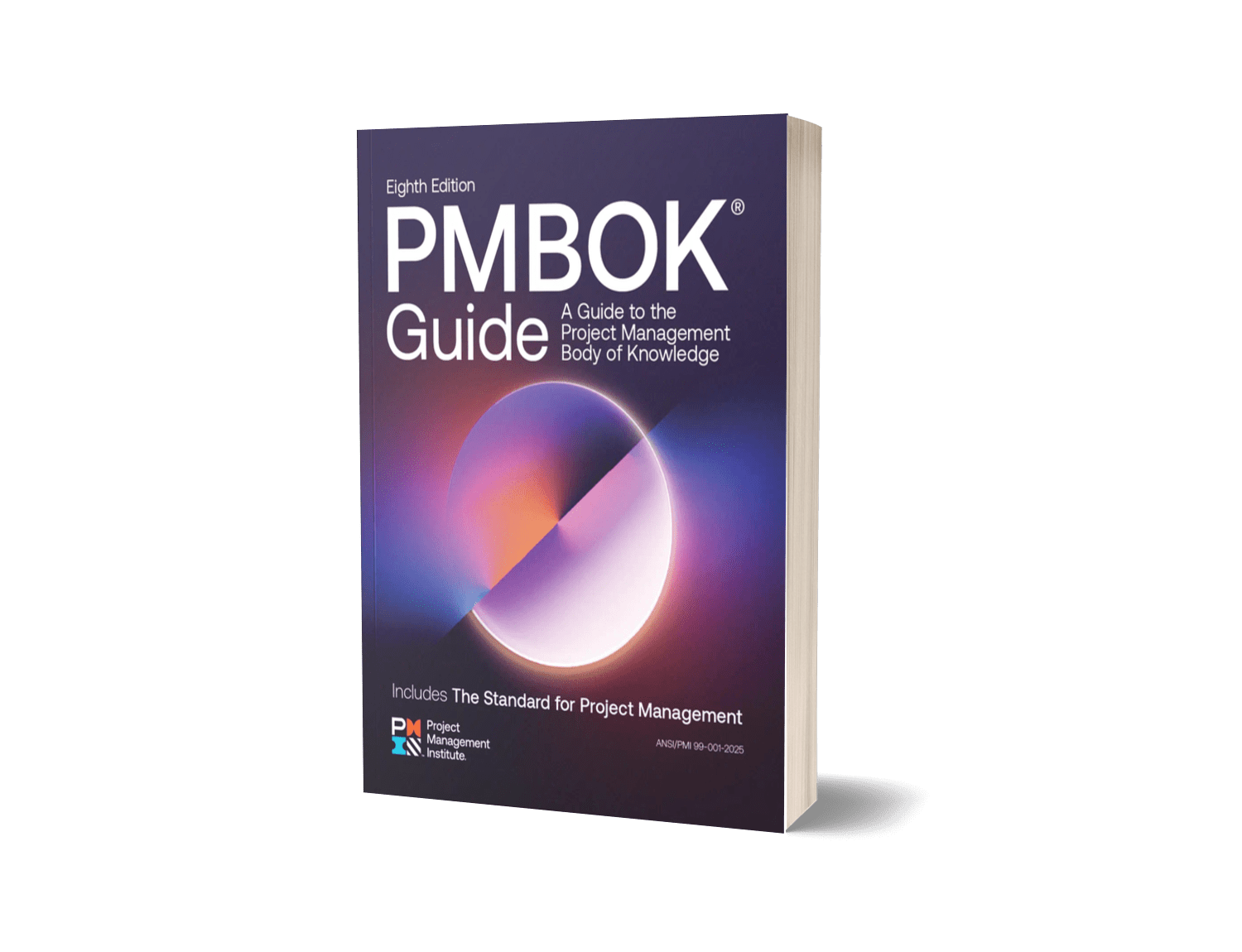
The PMBOK Guide, Eighth Edition, introduces a new step in the evolution of project management. The PMI has moved toward a more flexible and adaptive structure over the past editions. Because of this, the new guide brings practical clarity and a stronger link between principles, performance, and day-to-day work.
The Seventh Edition focused on principles and outcomes. However, many professionals wanted clearer guidance. The Eighth Edition responds with structured processes, improved performance domains, and refined principles. As a result, the new PMBOK becomes easier to use in any type of project.




A Stronger Focus on Value Delivery
The Eighth Edition places value at the centre of project management. Value includes benefits, outcomes, satisfaction, and alignment with strategy. Therefore, the guide encourages continuous assessment of value throughout the project life cycle. When assumptions change, teams adjust quickly. This approach keeps decisions connected to what matters most.
Refined Principles for Better Practice
The new edition simplifies and clarifies project management principles. It removes overlaps and promotes clear behaviours.
Here is a quick comparison:
| PMBOK 7th Edition Principles (12) | PMBOK 8th Edition Principles (6) |
| Be a Diligent, Respectful, and Caring Steward | Adopt a Holistic View |
| Create a Collaborative Project Team Environment | Focus on Value |
| Effectively Engage With Stakeholders | Be an Accountable Leader |
| Focus on Value | Focus on Value |
| Recognize, Evaluate, and Respond to System Interactions | Embed Quality Into Processes and Deliverables |
| Demonstrate Leadership Behaviors | Be an Accountable Leader |
| Tailor Based on Context | Integrate Sustainability Within All Project Areas |
| Build Quality Into Processes and Deliverables | Build an Empowered Culture |
| Navigate Complexity | |
| Optimize Risk Responses | |
| Embrace Adaptability and Resiliency | |
| Enable Change to Achieve the Future State |
Table: Principles Changes from PMBOK 7th to 8th Edition
Structured Processes Return
One of the most important updates is the return of structured processes. The Seventh Edition removed them to focus on principles, yet many professionals still wanted concrete guidance. The Eighth Edition brings them back, but in a more modern way.
These processes are streamlined and directly aligned with performance domains. They explain what project managers actually do. They also help teams work across predictive, agile, and hybrid environments. In addition, they avoid rigid sequences. Instead, they create flow and interaction.
This update gives project managers a practical backbone while keeping flexibility. teams move smoothly from principles to real actions.
Updated Performance Domains
The Eighth Edition keeps performance domains but improves their structure. They now align more clearly with processes.
| PMBOK 7th Edition Performance Domains (8) | PMBOK 8th Edition Performance Domains (7) |
| Stakeholders | Governance |
| Team | Scope |
| Development Approach and Life Cycle | Schedule |
| Planning | Finance |
| Project Work | Stakeholders |
| Delivery | Resources |
| Measurement | Risk |
| Uncertainty |
Table: Performance Domain Changes from PMBOK 7th to 8th Edition
Process Groups Return as Focus Areas
The traditional Process Groups return with a new name: Focus Areas. This change reflects years of consistent feedback from practitioners.
These Focus Areas do not act as rigid phases. Instead, they help teams understand how work is organised across the project life cycle. They support coordination, communication, and tailoring. Because of this, teams gain structure without losing agility.
Modern Tools, Topics, and Terms
The Eighth Edition recognises the challenges of today’s project environments. It brings updated content on:
• Artificial Intelligence
• Automation
• Data analytics
• PMO evolution
• Digital collaboration
Terminology also changes. For example, “Cost” becomes “Finance”, and communications now sit inside Stakeholder Engagement.
What These Changes Mean for You
These updates bring balance. Teams gain structure, yet keep freedom to tailor. Organisations can modernise their methodologies more easily. Learners preparing for PMI exams gain early exposure to the new approach.
Ultimately, the Eighth Edition helps professionals lead projects with clarity, consistency, and adaptability.
Final Thoughts
The PMBOK Guide, Eighth Edition, unites the best of previous versions. It refines principles. It reintroduces processes. It strengthens performance domains. Most importantly, it brings a practical and modern framework.
Whether your work is predictive, agile, or hybrid, the new PMBOK supports effective and responsible project leadership.
The PMBOK Guide, Eighth Edition, introduces a modern and flexible framework that strengthens value delivery, clarifies principles, and reintroduces structured processes aligned with performance domains. The guide reflects today’s project environments, integrates new topics such as AI and data analytics, and supports predictive, agile, and hybrid approaches. It helps project managers work with clarity, focus, and adaptability.